

How to Buy Property in Chile as a Foreigner
Good news: Chile treats foreign buyers almost exactly like locals. Here is the honest, step-by-step version — including the parts no glossy brochure tells you.
Actualizado · 2026-06-23 · lectura honesta, sin letra chica

Chile is one of the easiest countries in Latin America for a foreigner to own real estate. The constitution gives foreigners the same property rights as Chileans — no special permit, no visa, no residency required to buy. You can own a house, an apartment, a plot of land or a vineyard outright, in your own name.
So what is actually different for a foreigner? Three things: you need a tax ID (the RUT), local banks rarely lend to non-residents, and the real risk is not the law — it is the paperwork on the specific property. This guide walks all of it in plain English.
Can a foreigner really own property here? Yes.
There are no nationality restrictions on owning urban property or most rural land in Chile. You hold full title (dominio) in your name, recorded at the local Conservador de Bienes Raíces (the property registry). The only notable exception is some land in border zones, which is rarely what a private buyer is looking at.
You do not need to live in Chile, hold a visa, or have residency to buy. Plenty of owners buy first and visit later.
The one thing you do need: a RUT
The RUT (Rol Único Tributario) is Chile’s tax identification number. Any person who owns property or signs a deed here needs one. A foreigner can obtain a RUT without being a resident — it is a straightforward administrative step, and a local advisor or lawyer can arrange it for you.
With your RUT in hand, you can sign the deed, register the property, pay taxes and set up utilities. It is the key that unlocks everything else.

“Buying in a country that isn't yours is not about trust. It's about proof”
Financing: why most foreigners pay cash
Here is the practical reality: Chilean banks almost never give mortgages to non-residents. Mortgage lending is built around local income, a local credit history and residency. So the large majority of foreign purchases are cash (or financed from your home country / international structures).
That makes the title check even more important — when you are wiring real money, you want absolute certainty about what you are buying. More on that below.
The buying steps, start to finish
A clean purchase usually looks like this: (1) you make an offer; (2) you sign a promesa de compraventa (promise-to-buy contract) and put down a reservation amount; (3) a title study is done on the property; (4) you sign the escritura (deed) before a notary; (5) the deed is inscribed at the Conservador, and the property is legally yours.
The promesa stage is where a good advisor earns their keep: it locks in price and terms while the title is checked, with clear conditions if something turns up.
What it costs (beyond the price)
Budget for: the broker commission (commonly around 2% + IVA, and negotiable), notary fees, the Conservador inscription fee, and the title-study/legal review. Real-estate agents in Chile are unregulated, so who you trust matters more than usual.
There is no annual "wealth tax" on a single home, but properties pay contribuciones (property tax) based on the SII’s fiscal appraisal — worth checking before you buy, because it is an ongoing cost.
Registrar of Deeds, tax authority, treasury, municipal works and more. A hidden problem in the title shows up BEFORE you sign or wire a single peso — and we explain it to you in English.
Why a bilingual advisor is not a luxury here
Every guide for foreigners says the same thing: get someone who speaks your language and knows the local traps. Contracts, the registry, the notary and the negotiation all happen in Spanish, fast. A bilingual advisor who can explain each document — and who runs a real title check before you pay — turns a nerve-wracking process into a calm one.
That is exactly what we do at Divergente: we work in English, and we cross eight public Chilean registries on every property before you sign, so a sleeping problem in the title shows up before it costs you money.
Así se ve una propiedad en El Tabo desde nuestra publicidad
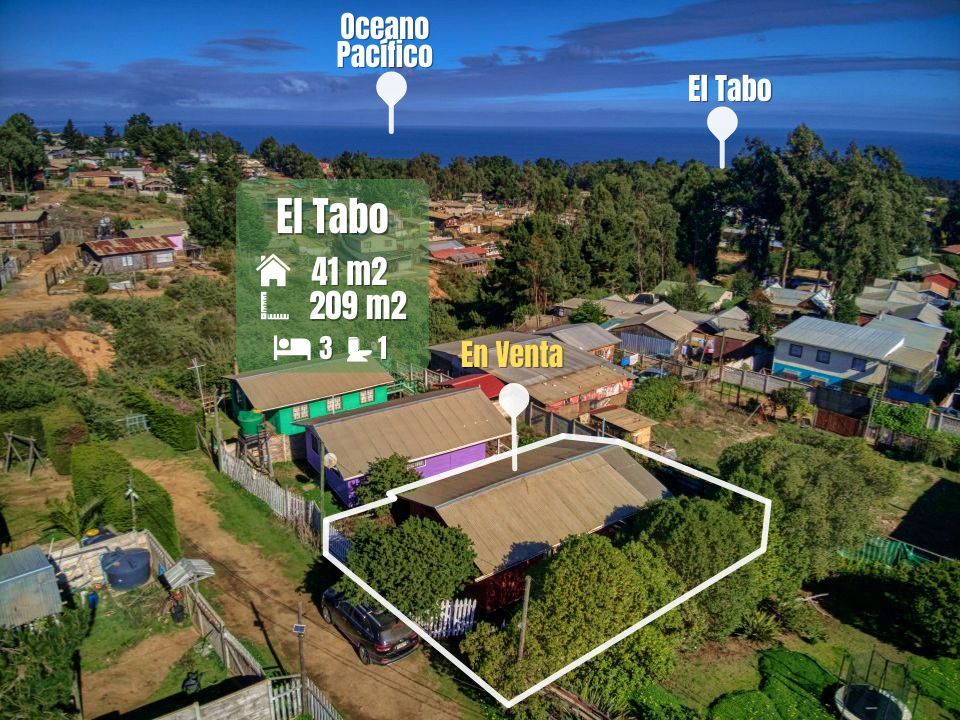
Venta en El Tabo · $65.000.000 — foto de nuestra propia publicidad, no de un catálogo prestado.
Ver esta propiedad en El Tabo →Frequently asked questions
Do I need a visa or residency to buy property in Chile?
No. Foreigners have the same ownership rights as Chileans and can buy without a visa or residency. You do need a RUT (tax ID), which a foreigner can obtain without residency.
Can a foreigner get a mortgage in Chile?
Rarely. Chilean banks generally lend only to residents with local income and credit history, so most foreign purchases are made in cash or financed from abroad.
How much is the agent commission?
Commonly around 2% + IVA per side and negotiable. Because agents are unregulated, choose one who actually adds value — especially a proper title review.
Do I need a lawyer?
Not legally required, but strongly recommended — and even more so if you do not speak Spanish. A title study before you pay is the single best protection against buying a hidden problem.
Talk to a bilingual advisor
Thinking of buying in Chile? Talk to a bilingual advisor who checks the title before you wire a peso.
We work in English, and we cross eight public Chilean registries on every property — so a hidden problem in the title shows up before you pay.